Address
China-Base Plaza, No.666 Tiantong South Rd, Yinzhou Dist., Ningbo,Zhejiang, China, 315199
Work Hours
Monday to Friday: 9AM - 6PM
Weekend: 10AM - 5PM

Address
China-Base Plaza, No.666 Tiantong South Rd, Yinzhou Dist., Ningbo,Zhejiang, China, 315199
Work Hours
Monday to Friday: 9AM - 6PM
Weekend: 10AM - 5PM
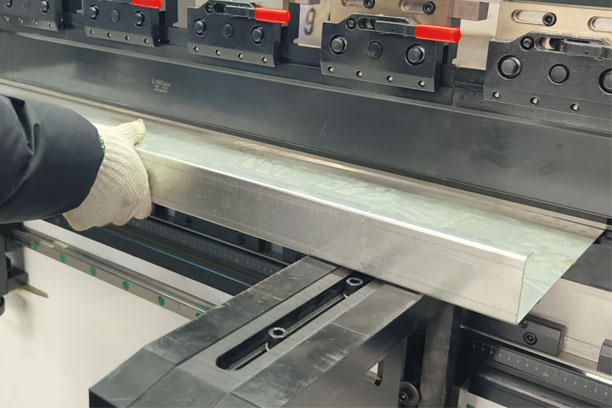

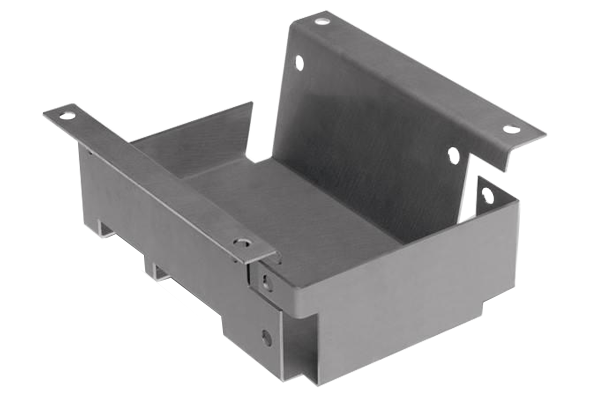
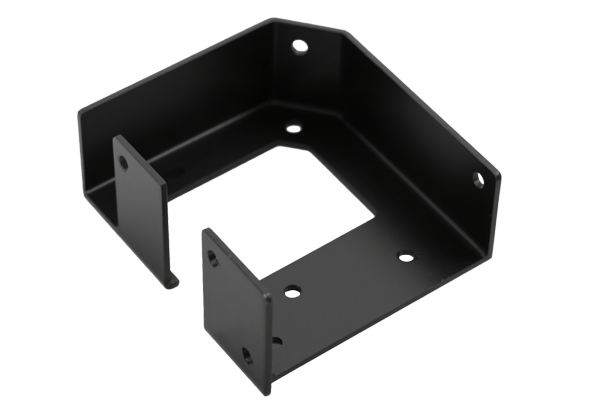

Sheet metal bending methods are similar in that their end goal is to transform sheet metal structures to the desired forms. However, they differ in operation. Knowing how to bend sheet metal comes with understanding that factors such as the thickness of the material, size of the bend, sheet metal bend radius, and intended purpose determine the methods.
The methods listed below would not only show you how to bend sheet metal. They would also show you which to employ for the best outcome. The most common sheet metal bending methods are:
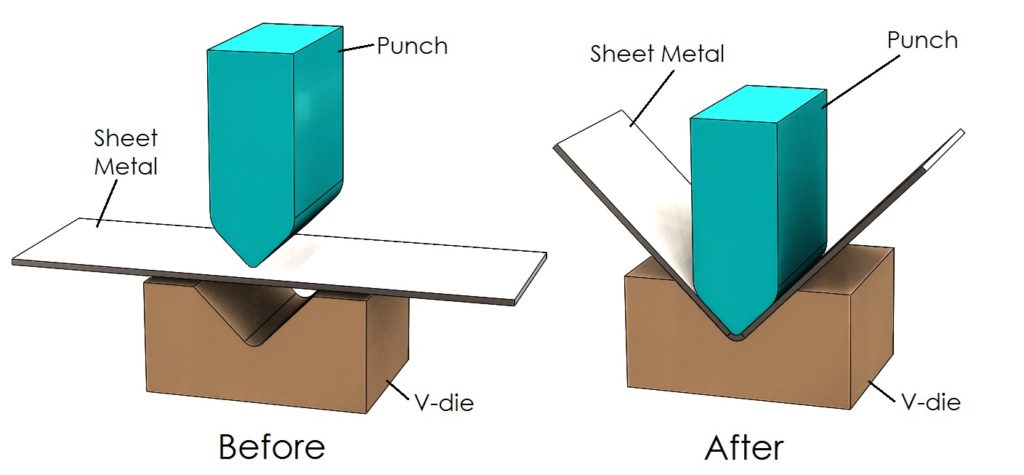
This is the most common sheet bending method as it is used for most bending projects. It employs an instrument known as the punch and v-die to bend sheet metals at desired angles. During the process, the bending punch presses on the sheet metal placed over the V-die.
The angle formed by the sheet metal is dependent on the pressure point of the punch. This makes this method easy and efficient as it can be employed for bending steel plates without altering their position.
The V-bending method can be classified into three:
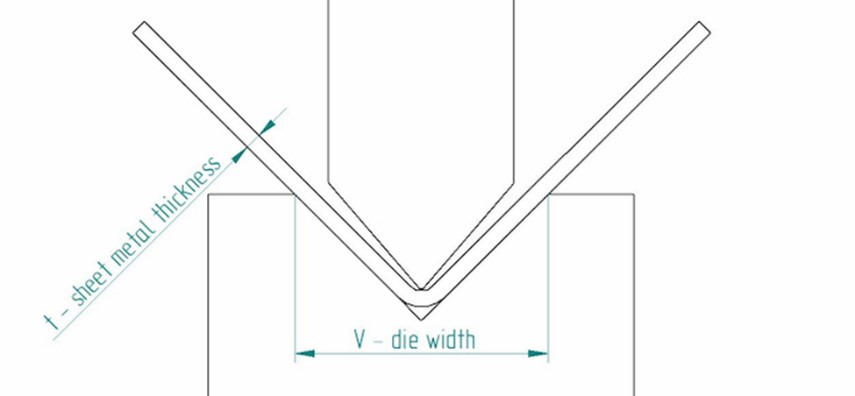
As the name suggests, bottoming or bottom bending involves compressing the sheet metal to the preset die’s bottom to form a defined angle and shape. In bottoming, the position and shape of the die angle determine the outcome of the bend. Also, the spring-back of the compressed sheet metal is impossible. This is because the force of the punch and the die’s angle conforms the sheet metal to a permanent structure.
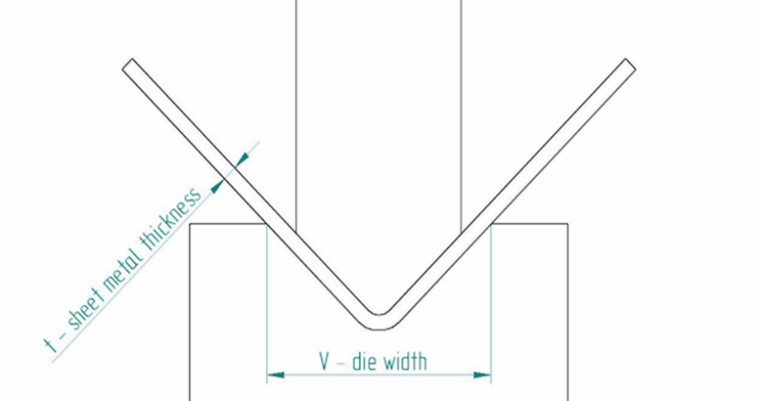
Coining is a bending method widely employed for its precision and its unique ability to create distinguishing sheets. In the process, there is no spring-back of the sheets. This is because the coin penetrates the sheet metal at a small radius, creating a dent present on a coin to distinguish sheets from another.
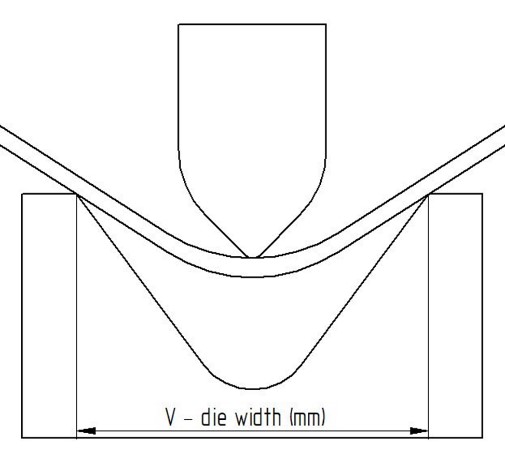
Air bending or partial bending is a less accurate method compared to bottoming and coining. However, it is usually employed for its simplicity and ease of manipulation since it doesn’t require tools.
There is also a disadvantage. Air bending is the only method prone to the spring-back of the sheet metal.
In air bending, the punch exerts a force on the sheet metal resting on both points of the die’s opening. A press brake is usually employed during the V bending as the sheet metal does not come in contact with the bottom of the die.
(A press brake is a simple machine employed in sheet metal bending processes, it forms desired bends on the sheet by working to clamp the sheet metal in position for press between the punch and the die)
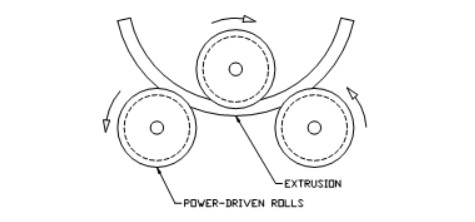
Roll bending is a method used to bend sheet metals into rolls or curved shapes. The process employs a hydraulic press, a press brake, and three sets of rollers to make different bends or a big round bend. It is useful in forming cones, tubes, and hollow shapes as it takes advantage of the distance between its rollers to make bends and curves.
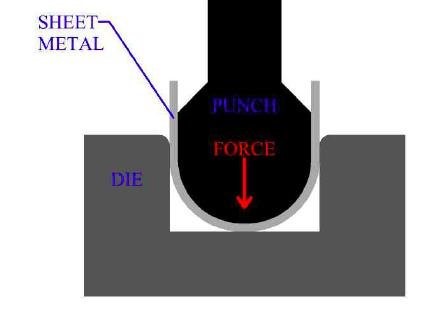
In terms of principle, U-bending is akin to V-bending. It uses the same instrument (except a U-die) and process, although the only difference is that the shape formed is U-shaped. U-bending is very popular. However, other methods produce the shape flexibly.
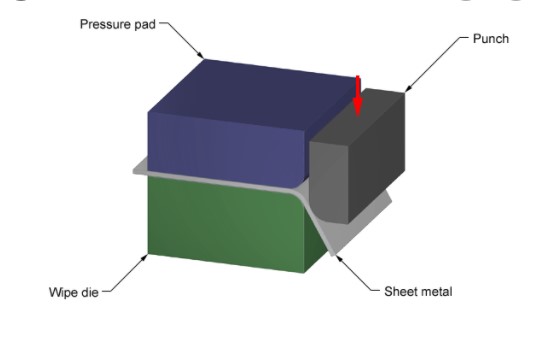
Wipe bending is another method used in bending sheets of metal edges. The process depends on the wipe die. For example, the sheet metal must be properly pushed onto the wipe die. The wipe is also responsible for the determination of the sheet metal’s bend inner radius.
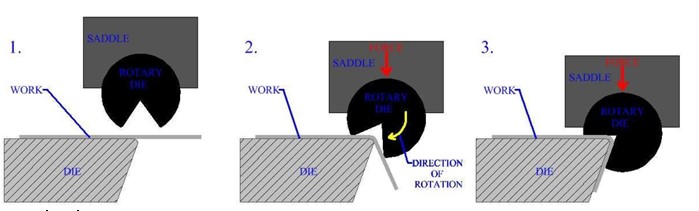
This bending method has an advantage over wipe bending or V-bending because it does not lead to scratching the material’s surface. It is also ideal because it can bend materials into sharp corners. For example, it is used in bending corners greater than 900.
This is material needed to add overall length of the sheet metal so that you cut it precise size desired.
When you bend sheet metal, it gets bigger, to having larger dimensions than flat metal, unless you consider exterior metal dimensions.
The formula to get bend allowance is
Is metal creating process where you apply force to sheet metal to make it bend at angle and form wanted shape.
This is a straight line on sheet that is on which-ever side of bend, this describes level flange end and bend start.
Straight line where exterior surfaces of two flanges meet and are to continue, describes edge of mold that bound bent sheet metal.
This is length extension of two flanges that actually extends just from the edge of the sheet to bend line.
This is actually the distance from the sheet end to the exterior or outside of the mold line on either side.
This is the distance from bend line to outside mold line, its equal to difference between mold line and flange length.
This is measured along the bend axis, it’s also the bend length.
This is the distance from axis to interior of the metal between bend line, also known as inside bend radius.
The exterior or outside bend radius is usually also equal to the interior bend radius together with the thickness of sheet.
This is an angle that you measure between bent flange and the original position or as included angle between perpendicular lines.
This is a complementary angle to the bend angle.
Length of neutral axis between bend lines when you add this to flange length it is equal to total flat length.
Amount piece of metal is stretched by bending, its value equals difference between mold line, length and total flat length.
Another name is bend compensation.
Q1 Surface scuffing problem after bending
Cause analysis:
Solution:
Q2 “Corrosion pits” “Peeling” problem on the bending parts surface
Cause analysis: Due to the existence of bubbles or rain phenomenon in the plate itself, in the processing will appear “skin” and “corrosion pits” phenomenon, generally difficult to detect with the naked eye, this situation rarely occurs.
Solution: The use of magnetic particle inspection can solve this problem (the cost is very high).
Q3 Bending rebound problem
Cause analysis: In the process of processing different materials (carbon steel, stainless steel, aluminum alloy), if the equipment programming parameters are adjusted to the same, the rebound of the material will vary greatly, either the angle is too small, or the angle is too large.
Solution: As bending materials are different (carbon steel, aluminum, stainless steel), choose different material to process, and adjust the bending angle to solve the rebound problem.
Q4 Surface cracking problem
Cause analysis:
Solution:
Q5 Surface indentation problem
Cause analysis:
Solution:
The use of these methods and mastery of the above, can be used in the sheet metal bending processing to avoid some common quality problems. To improve the quality of products, is our top priority. Whether manual, or mechanized and the future of intelligent, it is essential to put product quality in the first place in the production and processing. Thus, the development trend of high quality, high standards and high requirements to enhance our competitiveness.