Address
China-Base Plaza, No.666 Tiantong South Rd, Yinzhou Dist., Ningbo,Zhejiang, China, 315199
Work Hours
Monday to Friday: 9AM - 6PM
Weekend: 10AM - 5PM

Address
China-Base Plaza, No.666 Tiantong South Rd, Yinzhou Dist., Ningbo,Zhejiang, China, 315199
Work Hours
Monday to Friday: 9AM - 6PM
Weekend: 10AM - 5PM
Laser cutting is a production and prototype tool typically used by engineers, designers, and artists to cut and etch into flat material. In order to cut out the shapes and geometries specified by designers, laser cutters use a thin, concentrated laser beam to puncture and cut through materials. In addition to cutting, laser cutters can also raster or etch designs onto workpieces by heating the workpiece’s surface and removing the material’s top layer to alter the appearance of the area where the raster operation was done.
Related capabilities: Custom Capability · CNC bending · Sheet metal stamping · Products
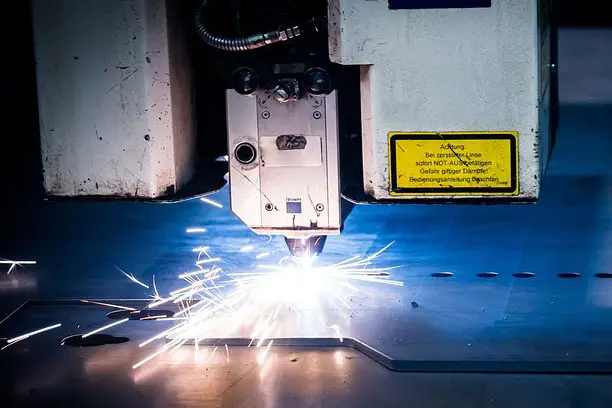
How fast the head of the laser cutter moves along its gantry. A high speed will cut faster, but may not cut all the way through if you have thicker or stronger materials. A low speed will definitely cut through, but has the potential to burn or melt the edges of the material as it slowly cuts. During raster operations, the laser moves back and forth very quickly, so a high speed on a large piece may wear out the gantry.
Laser cutting does not require an exchange of tools for each separate cut. The same setup is suitable for cutting a lot of different shapes within the same material thickness. Also, intricate cuts do not pose any problems.
Accuracy is one of the primary advantages of laser cutting when compared to other thermal cutting methods.An accuracy of +/-0.1 mm gives an opportunity to achieve high precision without any after-treatment. In most cases, such a high standard means that no added tolerances are required.
The job needs little manpower as contemporary laser cutting machinery is highly automated. An experienced machine operator still plays a big role in the final quality but the speed of cutting and little need for manual labour result in lower costs compared to other cutting methods.

Sheet metal laser cutting process
Choose a type of software which is compatible to the machine e.g. Adobe Illustrator or CorelDraw and upload.
Take the type of the material you want to cut and feed to the machine for material setting.
This helps in adjustment of laser intensity of machine like applying pressure intensely while cutting metal than when cutting wood or foam.
Check and analyze the cut quality and other specifications ensuring no movement of material during the cutting process.
Take the workpiece off the machine once the cutting is completed and is in par with the parameters set.
The end product of the material will have improved edge quality and surface finish.
A cutting machine that uses optical fibre to create its laser is called a fibre laser cutting machine.
There will be no need for the laser to produce a higher energy output to cut the material.
This is because the laser is absorbed into the reflective materials that it is cutting hence making it an ideal laser cutter.
A laser cutter that is created through an electrical carbon dioxide mixture is called a CO₂ laser cutting machine.
Laser cutting machine is most suited on non-metals but is used on both metal and non-metal materials.
The machines mark, cut and engrave different types of materials like plastics and wood.
Crystal laser cutting machine
Crystal laser cutting machines are neodymium-doped yttrium aluminium garnet and neodymium-doped yttrium ortho-vanadate.
Laser cutting machines are used in various applications in medical and manufacturing industries due to their extreme powerful nature.
For industries that work with a variety of materials, laser cutting machines are a great choice.
They mark, cut and engrave materials both metal groups and non-metal.
For any questions or inquiry about sheet metal laser cutting, contact us now.