Address
China-Base Plaza, No.666 Tiantong South Rd, Yinzhou Dist., Ningbo,Zhejiang, China, 315199
Work Hours
Monday to Friday: 9AM - 6PM
Weekend: 10AM - 5PM

Address
China-Base Plaza, No.666 Tiantong South Rd, Yinzhou Dist., Ningbo,Zhejiang, China, 315199
Work Hours
Monday to Friday: 9AM - 6PM
Weekend: 10AM - 5PM
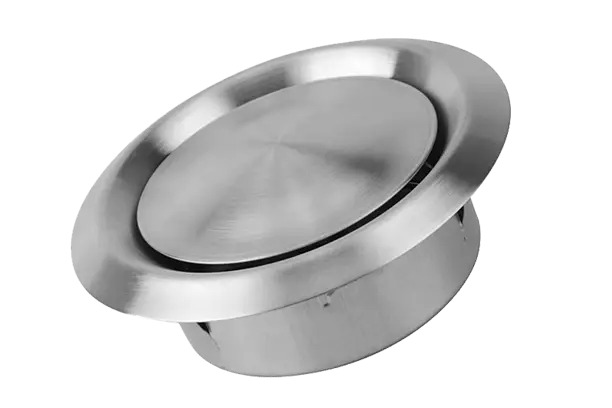
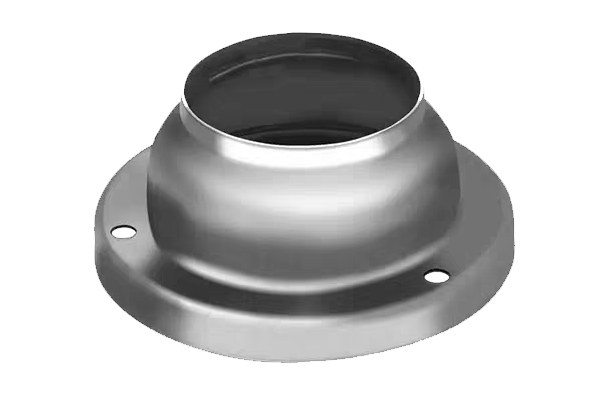
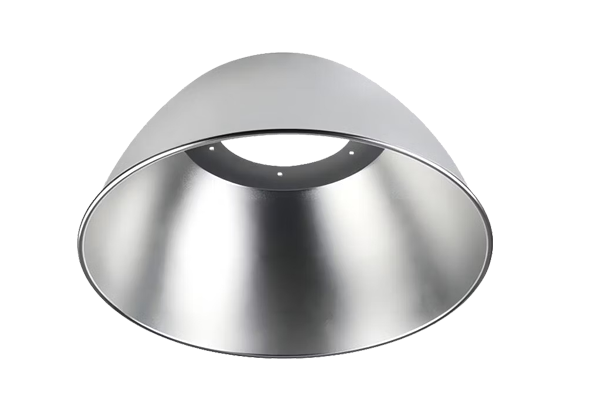
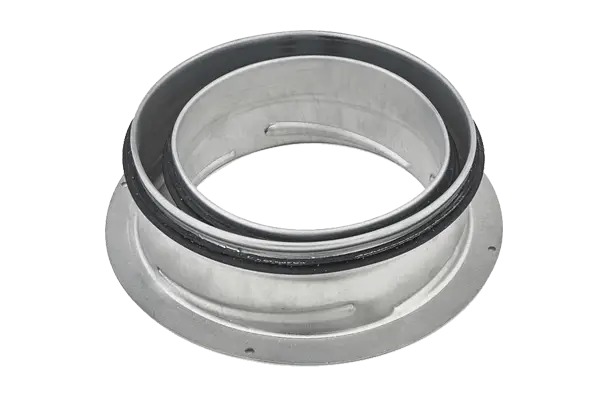
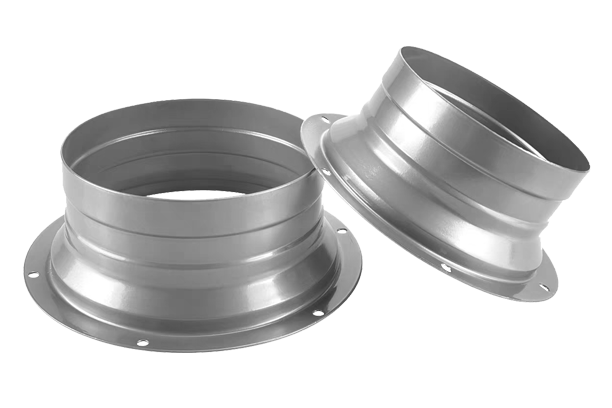
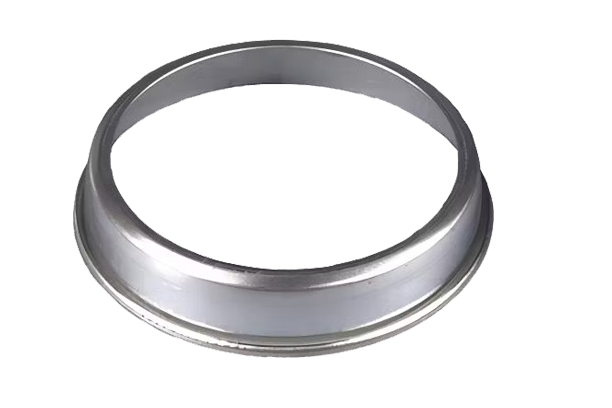
Deep drawing is the process by which a flat sheet of steel is transformed into a deep shape, whereby the flat sheet is “drawn in” from the edges and “sucked in” to create a deep shape that otherwise may not be possible using normal metal forming techniques. We are pleased to offer deep drawn stamping solutions for customers in a variety of industries and applications. Our stamping expertise ranges from ventilation and elevator components to food industry.
Related capabilities: Custom Capability · Sheet metal stamping · Laser cutting
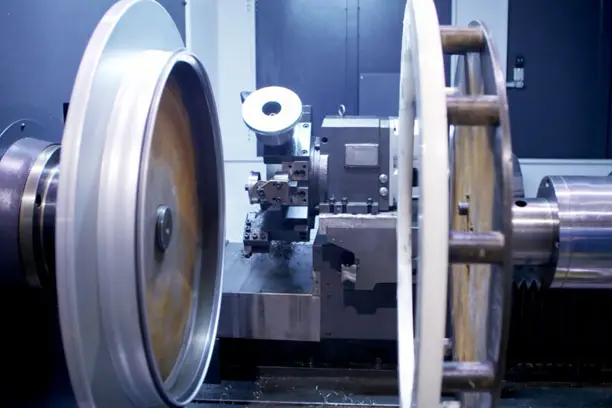
A deep drawn can or tube shape has no joins. That makes deep drawing an ideal process for anything that needs to be water or gas-tight.
Parts coming off a forming press are extremely repeatable. Assuming the tooling was made correctly, they’ll also conform very closely to the drawing.
We’ve talked here about simple shapes like cans and sinks, but deep drawing can create more complex forms.
Deep drawing produces shapes with closed ends. That avoids the need to cut and weld multiple pieces.

The main difference between sheet metal stamping and deep draw stamping is the cost. Sheet metal stamping is less expensive than deep draw stamping because it requires more tooling and setup time. This also makes it an economical choice for businesses that need large quantities of parts produced quickly.
Sheet metal stamping produces more durable parts than those created through the deep drawing process. This is because the material is not subjected to as much tension during production, reducing the likelihood of surface deformities or buckling.
Sheet metal stamping is a straightforward process compared to deep drawing and does not require as much highly skilled labor to operate the machinery. This makes it a good choice for businesses that want to save on labor costs.
Sheet metal stamping is limited to simple designs, whereas deep drawing can produce parts of significant complexity, detail and/or size, providing the dimensions fit the machine’s capacity.
Deep drawing tolerances are less precise than those achieved through sheet metal stamping. This means greater variation in the dimensions of deep draw parts, which can be a problem for businesses that need parts with tight tolerances.
Deep drawing is most effective with sheet metal, making it a good choice for industries that work primarily with metal. Sheet metal stamping can create parts out of any material, broadening its appeal in various sectors.
Feature | Hydraulic Deep Drawing Press | CNC Spinning Machine |
|---|---|---|
| Process | Metal blank is pressed into a die using a punch | A rotating metal blank is formed over a mandrel using rollers |
| Forming Type | Cold forming (high-pressure mechanical forming) | Incremental forming (plastic deformation via spinning) |
| Material Flow | Material is drawn radially into a die cavity | Material is stretched/thinned over a shape progressively |
| Production Nature | Single-shot deep forming operation | Multiple passes to gradually shape the part |
| Feature | Hydraulic Deep Drawing Press | CNC Spinning Machine |
|---|---|---|
| Material Thickness | Medium to thick gauge metals | Thin to medium gauge metals |
| Part Geometry | Cylindrical, boxy, complex flanged parts | Axisymmetric, conical, parabolic shapes |
| Tolerance & Precision | High dimensional accuracy | Moderate to high (depends on setup and passes) |
| Speed | Fast for high-volume production | Slower (multi-pass, time-intensive) |
| Tooling Cost | High (custom dies and punch tooling) | Lower (mainly mandrels and rollers, reusable) |
| Feature | Hydraulic Deep Drawing Press | CNC Spinning Machine |
|---|---|---|
| Typical Products | Automotive panels, kitchen sinks, metal containers | Lampshades, satellite dishes, gas cylinders |
| Volume Suitability | High-volume production | Low to medium volume or prototyping |
| Hydraulic Deep Drawing | CNC Spinning |
|---|---|
| – Consistent results for mass production | – Cost-effective for small runs or custom parts |
| – High forming forces enable complex deep parts | – Low tooling cost and flexible design changes |
| – Suitable for a wide range of materials | – Good for hard-to-draw materials and seamless construction |
| Hydraulic Deep Drawing | CNC Spinning |
|---|---|
| – Expensive tooling | – Not suitable for non-axisymmetric parts |
| – Limited flexibility once tooling is set | – Slower production rate |
| – Risk of wrinkling or tearing in deep parts | – Skilled setup needed for tight tolerances |
Use Hydraulic Deep Drawing When:
Parts are non-symmetrical or have complex features (flanges, ribs).
Production volume exceeds 10,000+ units (amortizes tooling costs).
Material thickness >3mm (e.g., structural components).
Use CNC Spinning When:
Parts are rotationally symmetric (even complex curves like paraboloids).
Prototyping/low-volume (1–1,000 units).
Surface finish is critical (e.g., consumer goods).
Material is thin aluminum/copper (<3mm).