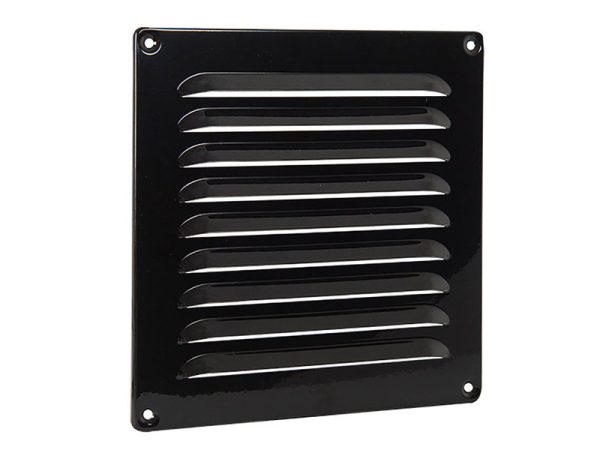
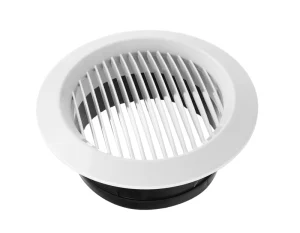
195×195 Poweder Coated Aluminum Ventilation Louvers

Product name: Aluminum ventilation external louvers

  • Product code:AEL-A
  • Material: Aluminum
  • Finish: Natural, copper, powder coated white or black.
  • Accessories: Nylon insect mesh(optional)
  • Available sizes: Standard or customized
  • Designed for indoor and outdoor ventilation and range hood air outlet
Item code
AEL-A
Material
Aluminum
Finish
Natural, copper, powder coated white or black.
Sizes available
Standard or customized

What it is

This unit is supplied as item code AEL-A, in Aluminum, finished with Natural, copper, powder coated white or black., across Standard or customized. An external louver is the weather-facing half of a ventilation system. Its job is to let air in and out while keeping rain, snow, leaves, birds and insects out, and those two requirements pull against each other — the open area that gives free airflow is the same opening that lets water in. Blade pitch, blade count and the blade profile are what settle that balance.

The range splits by construction and by material. Moulded aluminium external louvers with a stainless or aluminium mesh on the back give a one-piece weather shield with the insect screen built into the frame, which is the detail used where the opening is large and the louver is the visible architectural element. Aluminium extruded louver blades with a natural, copper, powder-coated white or black finish cover the general external wall opening. Plastic louver vents in anti-UV polypropylene with a built-in nylon screen are the answer for a dryer vent or a small opening where the louver is a service item rather than a facade item.

Blade spacing is specified by the free area you need, and the mesh gauge is specified by the insect size you must exclude. Both numbers should be confirmed against the opening at the time of quotation rather than chosen from the catalogue.

Technical specification

Item codeAEL-A
MaterialAluminum
FinishNatural, copper, powder coated white or black.
Sizes availableStandard or customized
NotesDesigned for indoor and outdoor ventilation and range hood air outlet

How to choose the right one

  1. Work out the free area first. A louver with a high open area passes more air at a lower velocity, and velocity at the louver is what decides whether rain is carried in with the air.
  2. Decide what the mesh has to stop. Bird mesh for large openings, insect mesh (typically 2 x 2 mm) for normal building openings, and a finer screen where the opening must exclude fine insects.
  3. Choose aluminium where the louver is architecturally visible or the site is coastal; plastic where the opening is small, the budget is tight, or the louver sits under a soffit where UV is limited.
  4. Check the louver fits the wall build-up — the depth of the reveal changes the effective blade performance, and a louver proud of the wall sheds water differently from one set back into it.
  5. For a dryer vent, use the plastic type with the built-in nylon screen: it is the code-accepted detail for the outside termination of a dryer exhaust, and it will not rust the way a galvanized louver does.

Material and finish options

MaterialFinishTypical use
Moulded aluminium with stainless mesh backNatural finishLarge external openings, architectural facades
Extruded aluminium bladesNatural, copper, powder coated white or blackGeneral external wall openings
Anti-UV polypropylene with nylon screenWhite or custom colourDryer vents, small service openings
Galvanized steel on requestZinc / powder coatIndustrial openings

Installation

  1. 1
    Set the louver in the opening with the flashing or the reveal detail your architect specified, and keep the louver set back far enough that the blades do the job they are designed for.
  2. 2
    Fix through the frame into the wall structure rather than into the reveal lining, so the fixings carry the wind load and not the louver frame alone.
  3. 3
    Fit the back mesh on the types supplied without it, and check it is secured on all four edges — a loose screen is the thing occupants notice first.
  4. 4
    Seal between the louver frame and the opening with the mastic or gasket specified, so the louver is not the path for water that gets past the blades.
  5. 5
    Check the louver after the first heavy weather in the first year; blade fixing on any louver works loose eventually, and doing it at year one costs a fraction of doing it at year five.

Where it is used

Commercial facades
Fresh air intakes and extract outlets on the visible elevation.
Plant rooms
Combustion air and equipment ventilation openings.
Residential
Dryer vents, bathroom extract terminations, soffit vents.
Hospitals and labs
Clean-to-dirty air transfer openings with insect exclusion.
Industrial
Large openings where airflow volume matters more than finish.

Packaging, shipping and OEM

Minimum order quantityMOQ is normally 300–500 pcs per model for stock items and 500 pcs per model for made-to-order sizes
Lead time25-30 days for standard sizes after order confirmation; tooling for new tooling parts starts around 35 days
SamplesSample pieces can be sent 3-5 days against your specification; courier cost is on the buyer side for the first trial order
PackingStandard export packing: bulk in corrugated cartons with pallet on request; retail colour box and printed barcode available for OEM orders
OEMOEM is available — item code, laser logo, carton print and retail box can all carry your brand
Trade termsFOB Ningbo / Shanghai; T/T 30% deposit before production and 70% against copy of B/L

Frequently asked questions

What free area should I specify?
Free area is decided by the airflow and the acceptable face velocity — too high a velocity at the louver and you will get rain carry-over. Send the airflow in cubic metres per second and the opening size and we will confirm the louver size rather than guess.
Bird mesh or insect mesh?
Insect mesh (around 2 x 2 mm) for normal building openings, bird mesh for openings large enough to admit birds. Both are available as a back mesh on the moulded aluminium types.
Will a powder coated louver match my facade colour?
Powder coating is available in white, black and custom colours, and can be matched to a sample. Send the colour reference and we will confirm the finish.
Can the louver be used on a coastal facade?
Yes, aluminium is the right material for a salt-laden atmosphere; galvanized steel is not, and 304 stainless blades are available where the specification demands it.
Is the plastic louver suitable for a dryer vent?
Yes — the anti-UV polypropylene type with a built-in nylon screen is the common external termination for a dryer exhaust, and it will not rust.
Do you make non-standard sizes?
Yes. Non-standard sizes and blade pitches are produced to order; send the opening size and the depth of the reveal and we will quote.

Related parts and capabilities

Not sure which variant fits? Send the drawing, the profile width or the outside diameter and we will confirm the part before you order. Email sales@climatecarer.com

Dimension

Product CodeW(mm)H(mm)Panel Column
AEL-A155*1551551551
AEL-A130*90130901
AEL-A195*1951951951
AEL-A195*1951951952
AEL-A180*90180901
AEL-A150*2151502151
AEL-A300*90300901
AEL-A245*1952451953
AEL-A 370*40370404
AEL-A495*65495653
AEL-A495*90495904
Need Help?