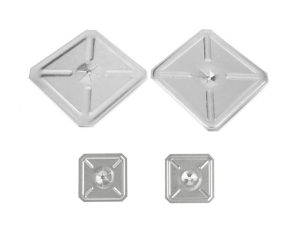
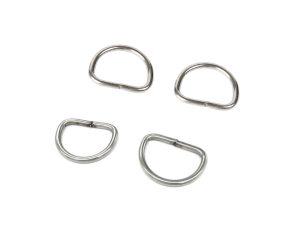
Material
Stainless steel or Low carbon steel
What it is
This unit is in Stainless steel or Low carbon steel. Perforated strapping band is the suspension and fixing media for hanging insulation and ductwork in a ceiling, a riser or a plant room. The band is perforated with an assortment of holes so that a threaded rod, a threaded clamp, a bolt or a lacing hook can be located anywhere along its length — that is what makes it possible to fix a hanger to a slab that is not in the place the drawing showed.
The band is made from galvanized steel or stainless steel and is delivered in a plastic dispenser on the types that see site use, so it unravels as the installer needs it rather than trailing across the floor. Width x thickness combinations are standardised (for example 12 x 0.6 mm, 17 x 0.6 mm and 25 x 0.6 mm) and the right combination depends on the load the hanger has to carry, not on the insulation thickness.
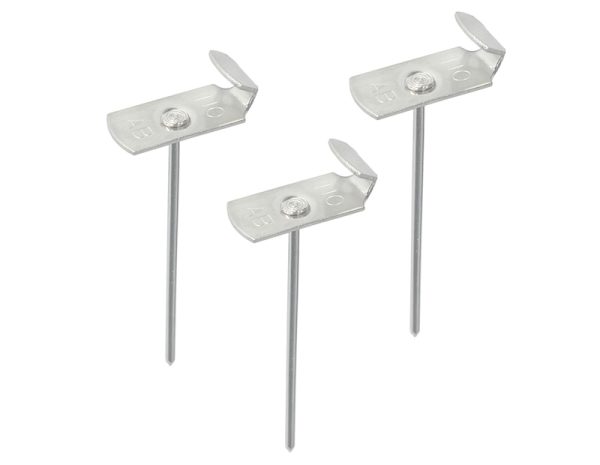
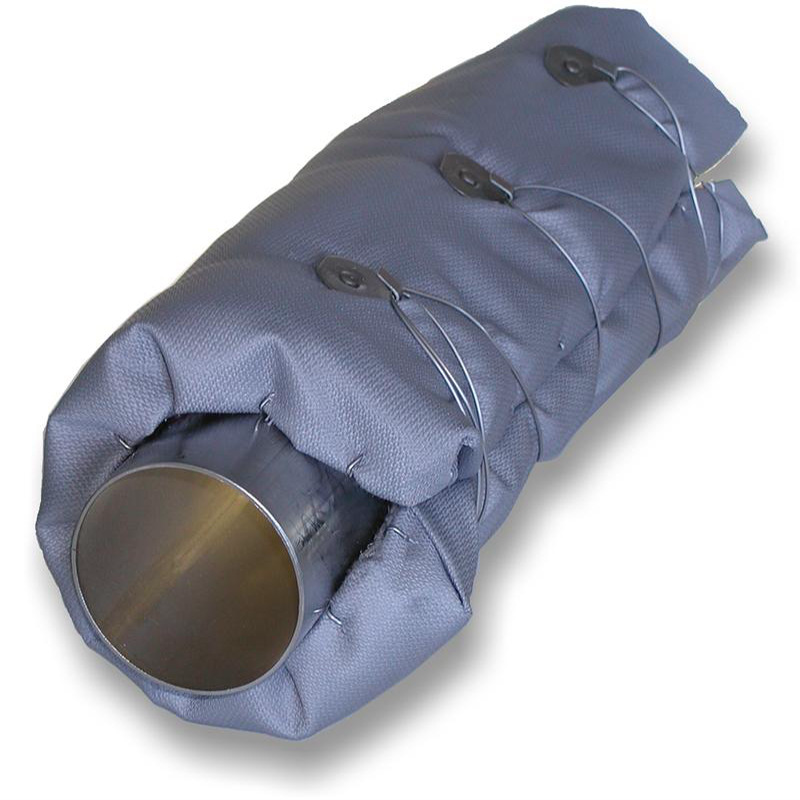
It belongs to the same family as the lacing anchors, hooks and washers used to close and tension insulation blankets, and specifying the band, the anchor and the washer together is what stops an insulation job from sagging in year three.
Technical specification
| Material | Stainless steel or Low carbon steel |
|---|
How to choose the right one
- Calculate the hanger load first, then pick the band section. A perforated band carrying a threaded rod and a hanger assembly has to have a section that will not stretch — that is a load question, not an insulation question.
- Use stainless where the band is exposed to condensation or to a corrosive atmosphere; galvanized is the normal choice inside a dry building.
- Choose the width from the fitting you are using: the hole pattern has to accept the threaded rod or clamp you intend to fix into it.
- Specify the same material for the band and for the anchors and washers — mixing galvanized band with stainless anchors creates a galvanic cell at the contact point.
Material and finish options
| Material | Finish | Typical use |
|---|
| Galvanized steel 0.6 mm, 12 / 17 / 20 / 25 mm wide | Zinc plating | Dry indoor suspension and hangers |
| Stainless steel 0.6 mm | Mill finish | Wet plant rooms, coastal, food plant |
| Steel with electro-zinc plating | Zinc | General fabrication |
Installation
- 1
Fix the anchorage into the slab or the steel with the insert or the threaded rod your specification gives.
- 2
Thread or hook the perforated band onto the anchorage and let the hanger sit at the position you want before tightening — the holes let you move it after the fact, which is the whole point of a perforated band.
- 3
For a hanger assembly, fit the threaded clamp or bolt through the band and take the load; check that the band is not relying on friction alone.
- 4
Where the band is used to tension an insulation blanket or lacing, wrap the exposed edges of the insulation so the band does not cut the facing.
- 5
Keep the run of band within the hanger spacing your design gives; a band that spans two hanger centres is carrying a load it was never checked for.
Where it is used
Commercial towers
Hanging ductwork and insulation in floor-to-floor voids.
Plant rooms and risers
Vertical suspension in shafts.
Food and pharmaceutical
Stainless band on wash-down areas.
Marine
Corrosion-resistant band in engine room ventilation.
Packaging, shipping and OEM
| Minimum order quantity | MOQ is normally 300–500 pcs per model for stock items and 500 pcs per model for made-to-order sizes |
|---|
| Lead time | 25-30 days for standard sizes after order confirmation; tooling for new tooling parts starts around 35 days |
|---|
| Samples | Sample pieces can be sent 3-5 days against your specification; courier cost is on the buyer side for the first trial order |
|---|
| Packing | Standard export packing: bulk in corrugated cartons with pallet on request; retail colour box and printed barcode available for OEM orders |
|---|
| OEM | OEM is available — item code, laser logo, carton print and retail box can all carry your brand |
|---|
| Trade terms | FOB Ningbo / Shanghai; T/T 30% deposit before production and 70% against copy of B/L |
|---|
Frequently asked questions
Which width and thickness do I need?
The width has to match the fitting that goes through it, and the thickness has to carry the hanger load. Send the hanger spacing, the duct weight and the fixing type and we will confirm the section rather than guess it.
Can the band be supplied already cut to length?
Rolls are the normal supply for site work; cut lengths are available for pre-assembly. Tell us the length when you enquire.
Is the plastic dispenser standard?
On the types supplied for installation yes — the dispenser keeps the band from tangling on site. Other packings are available for trade and OEM supply.
Can I mix galvanized band with stainless anchors?
We would not recommend it. Contact between two different metals in a damp void will start corrosion at the contact point. Keep the whole assembly one material.
Related parts and capabilities
Not sure which variant fits? Send the drawing, the profile width or the outside diameter and we will confirm the part before you order. Email sales@climatecarer.com
RFQ
What’s the difference between “Rectangular Insulation Lacing anchors” and “Round Insulation Lacing anchors”?
The main difference between Rectangular Insulation Lacing Anchors and Round Insulation Lacing Anchors lies in their base shape and application preferences:
Rectangular Insulation Lacing Anchors:
- Feature a rectangular base.
- Provide more surface area for adhesion when using adhesive-backed mounting.
- May offer better grip on certain insulation materials.
- Often used in applications where a wider anchoring surface is beneficial for load distribution.
Round Insulation Lacing Anchors:
- Feature a circular base.
- Typically offer even stress distribution in applications requiring uniform holding strength.
- Preferred in aesthetic or rotationally symmetric applications.
- Often chosen for ease of welding when used with capacitor discharge (CD) welding.
Common Similarities:
- Both are used to secure insulation materials (fiberglass, mineral wool, etc.).
- Both typically feature a nail or pin extending from the base, onto which insulation is impaled.
- Both can be used with lacing wires to tie down insulation securely.
Which One to Choose?
- If you need stronger adhesive bonding or better load distribution, go for rectangular.
- If you need even stress distribution or ease of welding, go for round.