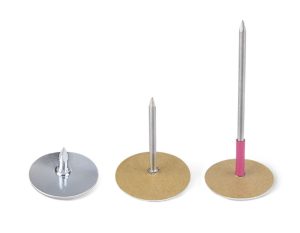
Finish
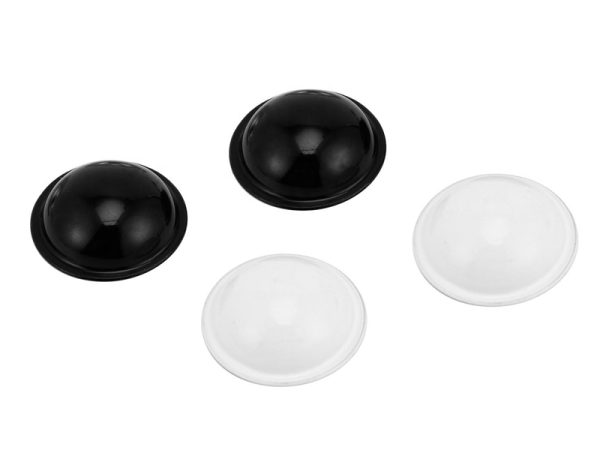
White or Black coated
What it is
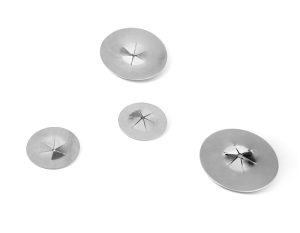
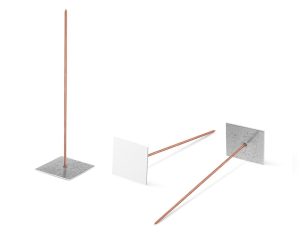
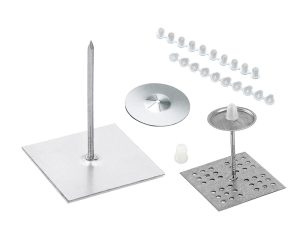
This unit is finished with White or Black coated. An insulation fastener is what holds a blanket of insulation onto a duct, a pipe or a vessel and keeps it there for the life of the building. The system is simple and each part has a job: the pin or anchor goes through the insulation, the washer or cap spreads the load on the far face and stops the insulation pulling off, and the locking washer holds the whole assembly against vibration.
Three fixing methods cover almost every substrate. The self-adhesive pin is the fastest and is used where the surface is flat, clean and accessible — it is the standard detail on factory-made duct panels. The capacitor discharge (CD) weld pin is the answer on steel where you need a mechanical fixing with no hole drilling and no bonding agent. The lacing anchor is used where the surface is irregular or where the insulation is applied in sections rather than as a continuous blanket.
Getting the pin length right is the whole detail: it has to be longer than the insulation so that the washer bears on the far face, but not so long that it pokes through the other side of the duct sheet. Specify the pin against the insulation thickness, not against the finished duct size.
Technical specification
| Finish | White or Black coated |
|---|
How to choose the right one
- Measure the insulation thickness at the job, then add roughly 25 mm for the pin to emerge past the far face. This single number decides the pin length for the whole job.
- Match the fastener to the substrate. Galvanized or carbon steel with a self-adhesive base on a clean factory panel; CD weld pins on unpainted steel; stainless anchors where the surface is painted, irregular or already insulated.
- Choose stainless where the insulation is applied to the outside of a cooling duct or a chilled water pipe — condensation runs down the outside face and is exactly what corrodes a galvanized pin.
- For stainless applications, distinguish 304 from 316: 304 for general corrosion, 316 where chlorides are present, which includes coastal sites and any process air carrying salt.
- Pick the cap to the face you need to protect. A plastic dome cap is the general choice; an aluminium dome cap is used where the face has to take impact; a coated cap is used where the insulation facing is soft and would be torn.
- On adjustable-height insulation, use the self-locking washer: it lets the installer set the height on site and lock it, instead of ordering three pin lengths for one job.
Material and finish options
| Material | Finish | Typical use |
|---|
| Galvanized steel pin, 2 x 2 in base | Zinc plated | Dry internal ductwork insulation |
| Stainless steel 304 pin and base | Passivated | External duct faces, chilled systems, humid plant |
| Stainless steel 316 / 316L | Passivated | Chemical, marine, coastal |
| Aluminium pin | Mill finish | Light assemblies, aluminium ducts |
| Plastic dome cap | Black / white | General insulation facing protection |
| Aluminium insulation dome cap | Natural / coated | Impacted faces, exposed ceilings |
Installation
- 1
Clean and degrease the fixing surface. Adhesive bases fail far more often from a dusty or greasy panel than from a bad batch of adhesive.
- 2
Press the base flat and leave the specified setting time before loading it — a base that carries load before it has cured peels off as a whole assembly, pin included.
- 3
Push the pin through the insulation from the clean side so the point emerges on the far face, and check it emerges rather than bending at the surface.
- 4
Fit the washer, the self-locking washer or the cap over the pin, and confirm the insulation is pulled tight to the surface with no gap at the edges.
- 5
On a duct that vibrates, use the self-locking washer and re-check the caps after the first week of running; a loose cap on a vibrating duct is what turns into a hole in the insulation.
- 6
Where insulation is applied to a cooling system, seal the pin base with mastic — the base is where condensation starts.
Where it is used
Commercial HVAC
Insulating supply, return and riser ductwork in occupied buildings.
Chilled water and refrigeration
Stainless fasteners on cold surfaces where condensation forms.
Power and process plant
Pipe and vessel insulation in high-temperature environments.
Shipbuilding
Insulation retention in engine rooms and on coolers.
Food and beverage
Stainless fasteners on wash-down areas and cold store ductwork.
Oil, gas and LNG
316 fasteners on cryogenic and chloride-bearing services.
Packaging, shipping and OEM
| Minimum order quantity | MOQ is normally 300–500 pcs per model for stock items and 500 pcs per model for made-to-order sizes |
|---|
| Lead time | 25-30 days for standard sizes after order confirmation; tooling for new tooling parts starts around 35 days |
|---|
| Samples | Sample pieces can be sent 3-5 days against your specification; courier cost is on the buyer side for the first trial order |
|---|
| Packing | Standard export packing: bulk in corrugated cartons with pallet on request; retail colour box and printed barcode available for OEM orders |
|---|
| OEM | OEM is available — item code, laser logo, carton print and retail box can all carry your brand |
|---|
| Trade terms | FOB Ningbo / Shanghai; T/T 30% deposit before production and 70% against copy of B/L |
|---|
Frequently asked questions
How long should the pin be?
Pin length = insulation thickness plus roughly 25 mm so the washer or cap bears on the far face of the insulation. If the pin is the same length as the insulation it will not tighten; if it is much longer it will punch through the opposite side of the duct.
Self-adhesive or CD weld pins?
Self-adhesive for flat, clean, accessible metal panels where speed matters. Capacitor discharge weld pins where you need a mechanical fixing on steel without drilling, or where the surface is coated and you cannot use an adhesive base.
Which stainless grade do I need?
304 covers the large majority of building services. Move to 316 where chlorides are present — coastal sites, pool halls, process air, and any cold surface that sweats.
Why is my dome cap popping off?
Almost always the pin is too short to bear properly, or the cap is fitted before the insulation settles. Re-check pin length against the as-built insulation thickness, not the specified thickness.
Can I use these on wood or concrete?
Not with an adhesive base as supplied — these are metal-face fasteners. For wood or concrete you need a different fixing, and we can quote that separately if you send the substrate and the load.
Are the stainless pins annealed?
Yes, on the grades supplied for insulation use the stainless nails are annealed so they can be driven and formed without cracking at the point.
What is the difference between a round and a square self-locking washer?
The square washer sits better on a square or ribbed base and spreads load over more face; the round washer is the general-purpose item. Both lock the same way — the square one is usually chosen where the base is irregular.
Do you supply the pins with pre-fitted bases?
Yes — pins come with the base either pre-assembled or separate depending on the type; we will confirm the configuration when you enquire. Bulk cartons and OEM packing are available.
Related parts and capabilities
Not sure which variant fits? Send the drawing, the profile width or the outside diameter and we will confirm the part before you order. Email sales@climatecarer.com