Material
1lyr alu+1lyr pet+1 pvc / 2lyr alu+1lyr pet+1 pvc
What it is
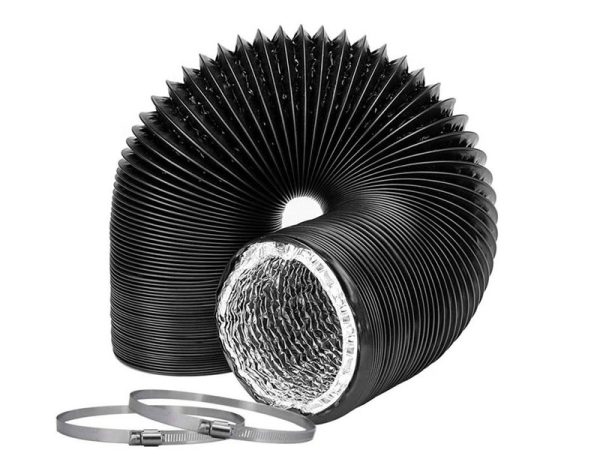
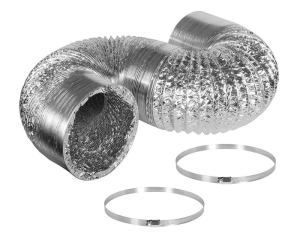
This unit is in 1lyr alu+1lyr pet+1 pvc / 2lyr alu+1lyr pet+1 pvc. Flexible duct is the short-run link between the fixed ductwork and the terminal device — the diffuser, the grille, the linear slot or the air terminal. It solves the four problems that rigid duct cannot: it turns a corner, it reaches across a ceiling void with a step or a drop, it absorbs the vibration from a fan, and it absorbs the misalignment between a designed centreline and what the builder actually left in the ceiling.
The range covers the three jobs it does in practice. Insulated flexible duct (glass fibre with foil or PET jacket, or PE polyester with built-in acoustic layer) carries conditioned air and stops condensation forming on the outside of the duct. Non-insulated aluminium duct and PVC combi duct move air only. Semi-rigid aluminium ducting is the stiff-but-still-flexible option when the run has to hold its shape.
Diameter, length and insulation level have to be chosen together, because the insulation thickness changes both the outside diameter and the fitting you can connect to. Getting that wrong is the most common cause of a diffuser that does not fit its flexible duct at handover.
Technical specification
| Material | 1lyr alu+1lyr pet+1 pvc / 2lyr alu+1lyr pet+1 pvc |
|---|
How to choose the right one
- Start from the diffuser neck size — the flexible duct has to terminate exactly at the neck, so the diameter is usually fixed by the terminal rather than by the airflow calculation.
- Decide whether you need insulation at all. Insulated duct is mandatory where the duct passes through an unconditioned space, where the air is dehumidified, or where the ceiling finish must not show condensation staining.
- Match the insulation level to the energy code. Ratings from R4.2 up to R6 and R8 are available depending on the jurisdiction and the ceiling void temperature difference.
- Check the connector type.. a bead-lock ending suits a bead-profile diffuser, a wire-bound ending suits a beaded spiral duct, and a plain sleeve suits a standpipe collar.
- For acoustic problems, the perforated inner core type is the one to specify: the holes are distributed along the inner duct so that fan and blower noise is absorbed before it leaves the duct rather than bouncing inside it.
- Never run flexible duct longer than the design allows. Long flexible runs add static pressure, and a run that is longer than the designer specified will quietly cost you fan energy through the whole life of the building.
Material and finish options
| Material | Finish | Typical use |
|---|
| Aluminium foil + PET + PVC (1 or 2 layer) | Natural metal | Non-insulated supply and return, short runs |
| Multi-layer aluminium with spring wire | Natural metal | Non-insulated duct needing shape retention |
| Glass fibre with aluminium foil jacket | Foil | Insulated supply duct, condensation control |
| PE polyester with perforated acoustic core | White PE | Noise-sensitive areas, fan and blower connections |
| PET jacket, R4.2 / R6 / R8 rated | White PET | Code-compliant insulated duct |
| PVC coated multi-layer | PVC | Where a wipe-clean outer surface is wanted |
Installation
- 1
Cut the duct square and make sure the inner surface is not compressed at the cut — a pinched core defeats the airflow.
- 2
Fit the correct end fitting for the terminal: bead-lock, wire-bound or plain sleeve.
- 3
Pull the duct in from the terminal end, not the fitting end, so the end fitting is not the part that gets damaged on the way through the void.
- 4
Keep the run as straight as the geometry allows and support it at the intervals your specification gives; flexible duct is a suspended item, not a laid item.
- 5
Seal the joints at both ends with the tape or mastic your ductwork specification calls for, then confirm the terminal fits before the ceiling is closed.
- 6
Where the duct passes through a fire-rated wall or floor, use the fire-rated collar or sleeve detail — the flexible duct itself is not the fire-stopping.
Where it is used
Office and hotel fit-out
Short drops from main duct to ceiling diffusers on every floor.
Hospital and lab
Insulated runs through unconditioned plenums, plus acoustic core for plant rooms adjacent to wards.
Retail and restaurant
Extract connections from ceiling cassettes, tight ceiling voids.
Residential and VRF
VRF indoor unit connections and mini split refrigerant-adjacent air links.
Plant and industrial
Low pressure connection between fan coil units and fixed duct.
Packaging, shipping and OEM
| Minimum order quantity | MOQ is normally 300–500 pcs per model for stock items and 500 pcs per model for made-to-order sizes |
|---|
| Lead time | 25-30 days for standard sizes after order confirmation; tooling for new tooling parts starts around 35 days |
|---|
| Samples | Sample pieces can be sent 3-5 days against your specification; courier cost is on the buyer side for the first trial order |
|---|
| Packing | Standard export packing: bulk in corrugated cartons with pallet on request; retail colour box and printed barcode available for OEM orders |
|---|
| OEM | OEM is available — item code, laser logo, carton print and retail box can all carry your brand |
|---|
| Trade terms | FOB Ningbo / Shanghai; T/T 30% deposit before production and 70% against copy of B/L |
|---|
Frequently asked questions
Can insulated flexible duct be used outdoors?
Only with a weather-protected jacket and the correct end sealing. Exposed to rain and UV, a standard foil jacket will fail at the folds long before the insulation degrades. Ask for the weather-resistant jacket if the run is truly external.
What is the maximum length I should specify?
Keep the run as short as the design allows and support it properly. Very long flexible runs add static pressure and lose the acoustic benefit; if your layout needs a long run, the design should be looking at a rigid section instead.
How do I choose the R value?
From the temperature difference between the air in the duct and the space it passes through, and from the energy code that applies to the building. For most conditioned supply duct in a temperate office, the mid-range rating is enough; for unconditioned plenums or cold storage, specify the higher rating.
Will the duct connect to my diffuser neck?
The ending is made to fit your terminal. Send the diffuser neck diameter and type when you enquire and we will confirm the fitting before production rather than after.
Can I get it in bulk rolls or in boxes?
Bulk and boxed lengths are both available; carton quantities per length are listed with each product. OEM length marking and retail packaging are available for importers.
Is the foil jacket a vapour barrier?
The foil jacket on the insulated types works as a vapour barrier as installed, provided the joints and penetrations are taped or sealed. If your specification requires a separate vapour barrier, tell us — the lay-up can include it.
Related parts and capabilities
Not sure which variant fits? Send the drawing, the profile width or the outside diameter and we will confirm the part before you order. Email sales@climatecarer.com